
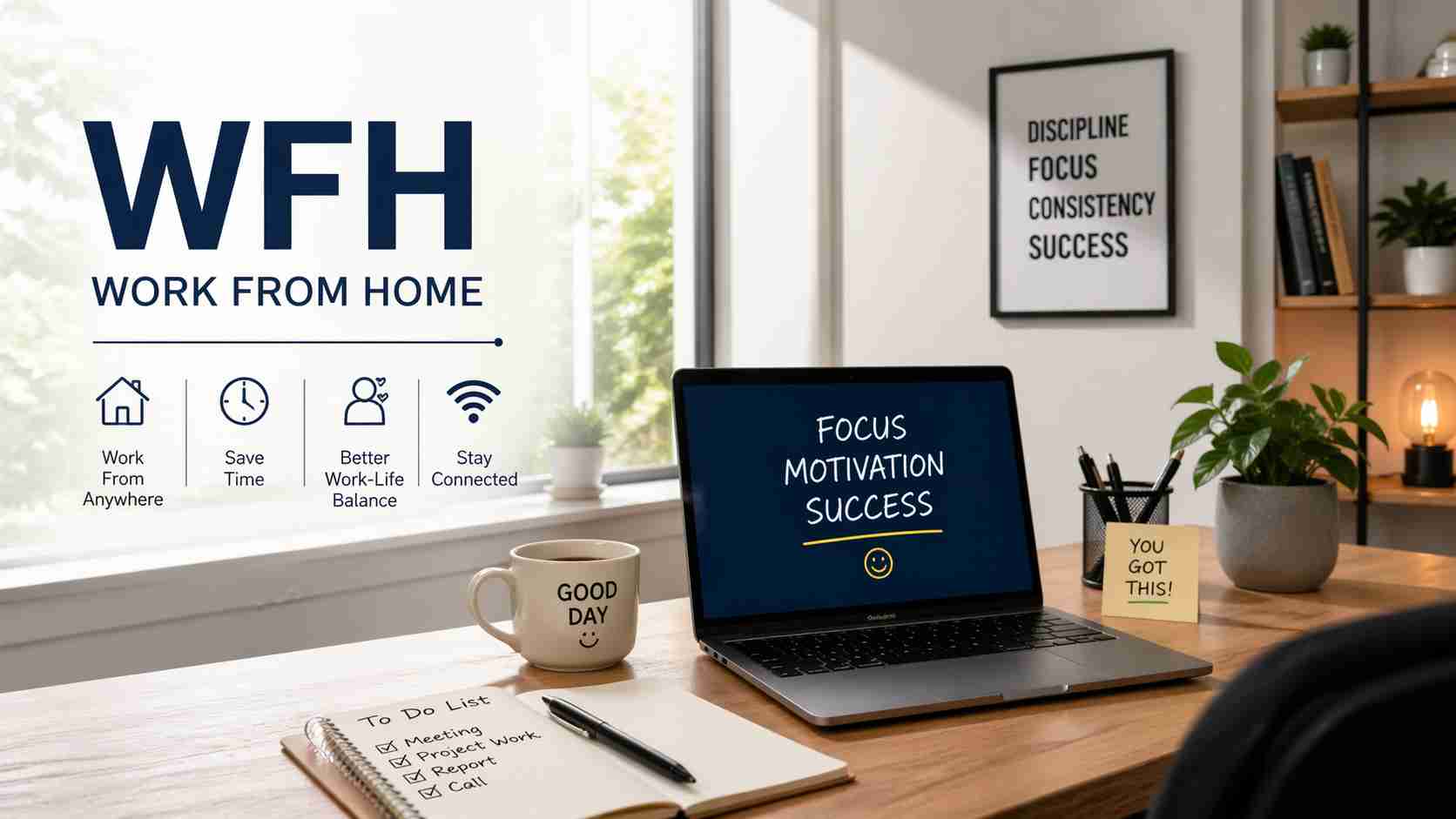
In today’s digital world, you may have seen the term WFH used in emails, messages, or job listings. It has become extremely popular, especially with the rise of remote work. But what exactly does WFH mean, and how is it used?
Understanding the WFH meaning can help you communicate better in professional and casual settings. In this guide, you will learn the full meaning of WFH, where it is used, and why it has become so common.
What Does WFH Mean
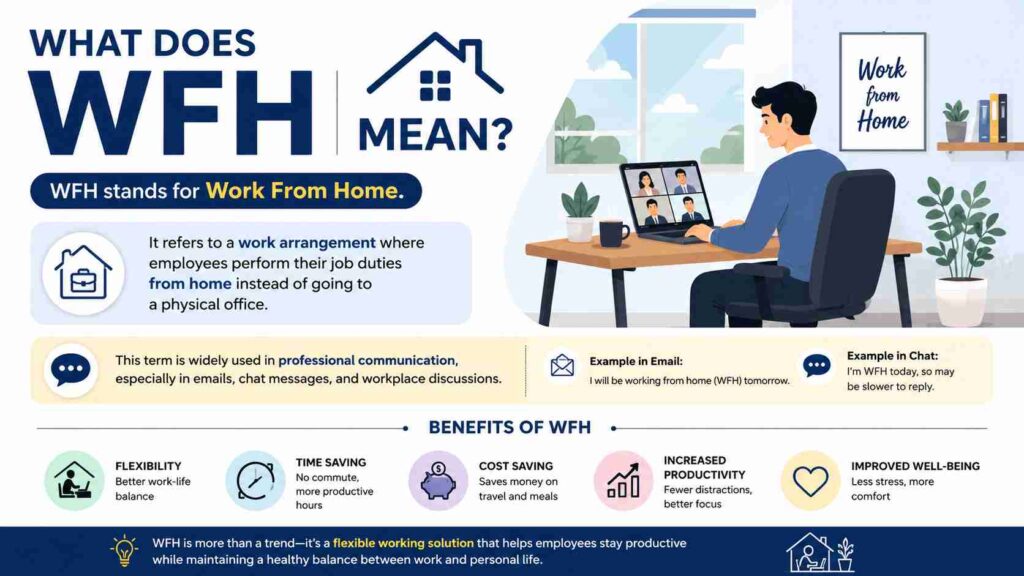
WFH stands for Work From Home. It refers to a work arrangement where employees perform their job duties from home instead of going to a physical office.
This term is widely used in professional communication, especially in emails, chat messages, and workplace discussions.
Where Is WFH Commonly Used
WFH is commonly used in different situations, including:
- Office emails and internal communication
- Job descriptions and hiring posts
- Messaging apps and team collaboration tools
- Social media posts related to work life
It has become a standard term in both formal and informal communication.
Why WFH Became So Popular
The popularity of WFH increased rapidly during the COVID-19 pandemic, when many companies shifted to remote work.
Since then, many businesses have continued offering remote or hybrid work options because of the flexibility and convenience it provides.
WFH Meaning in Chat and Text
In chat or text messages, WFH is used as a quick way to say that someone is working from home.
Examples:
- I am WFH today
- She is WFH this week
- We are switching to WFH mode
It saves time and makes communication faster.
WFH in Job Listings
WFH is often used in job postings to indicate that a position allows remote work.
You may see terms like:
- Full-time WFH
- Remote job
- Hybrid WFH option
This helps job seekers understand whether they need to work from an office or not.
Advantages of WFH
Working from home offers several benefits:
- No daily commute
- Flexible work environment
- Better work-life balance
- Increased comfort and productivity for many people
These advantages are a big reason why WFH is still growing in popularity.
Disadvantages of WFH
While WFH has many benefits, there are also some challenges:
- Lack of face-to-face interaction
- Possible distractions at home
- Difficulty separating work and personal life
- Communication gaps in some cases
Understanding these helps people manage remote work more effectively.
WFH vs Office Work
WFH and office work both have their own advantages.
- WFH offers flexibility and comfort
- Office work provides structure and in-person collaboration
Many companies now use a hybrid model that combines both.
How to Use WFH Correctly
Using WFH is simple and straightforward. It is mostly used in sentences like:
- I will be WFH tomorrow
- Our team is currently WFH
- He prefers WFH over office work
It can be used in both professional and casual communication.
WFH Full Form in Chat
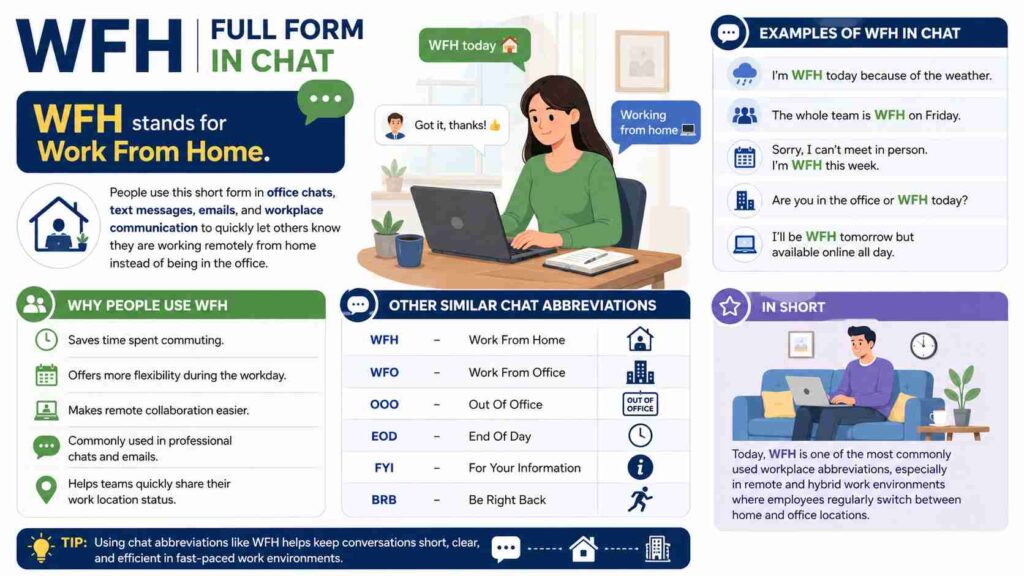
In chat, WFH stands for Work From Home. People use this short form in office chats, text messages, emails, and workplace communication to quickly let others know they are working remotely from home instead of being in the office.
Examples of WFH in Chat
- I’m WFH today because of the weather.
- The whole team is WFH on Friday.
- Sorry, I can’t meet in person. I’m WFH this week.
- Are you in the office or WFH today?
- I’ll be WFH tomorrow but available online all day.
Why People Use WFH
- Saves time spent commuting.
- Offers more flexibility during the workday.
- Makes remote collaboration easier.
- Commonly used in professional chats and emails.
- Helps teams quickly share their work location status.
Other Similar Chat Abbreviations
- WFH – Work From Home
- WFO – Work From Office
- OOO – Out Of Office
- EOD – End Of Day
- FYI – For Your Information
- BRB – Be Right Back
Today, WFH is one of the most commonly used workplace abbreviations, especially in remote and hybrid work environments where employees regularly switch between home and office locations.
WFH Meaning in Text
WFH means Work From Home. In text messages, chats, emails, and social media conversations, people use WFH to indicate that they are working remotely from their home rather than from an office.
What WFH Means in Text Messages
- WFH stands for Work From Home.
- It is commonly used in workplace chats and professional texts.
- The abbreviation helps save time when communicating.
- It lets others know your current work location.
- WFH is popular among remote and hybrid workers.
Examples of WFH in Text
- I’m WFH today, so call me anytime.
- The office is closed, everyone is WFH.
- I’ll be WFH tomorrow due to an appointment.
- Are you WFH or in the office today?
- Our team is WFH on Fridays.
Why People Use WFH in Text
- Quick and easy to type.
- Widely understood in professional settings.
- Helps coordinate meetings and schedules.
- Indicates remote work status instantly.
- Common in emails, messaging apps, and workplace communication.
Key Takeaway
When someone texts WFH, they simply mean Work From Home. It is a popular abbreviation used to inform colleagues, managers, friends, or clients that they are working remotely instead of being at a physical workplace.
Why Understanding WFH Meaning Matters
Knowing the meaning of WFH is important because it is widely used in modern communication. Whether you are applying for jobs, working remotely, or chatting with colleagues, understanding this term helps you stay updated and communicate clearly.
Final Thoughts on WFH Meaning
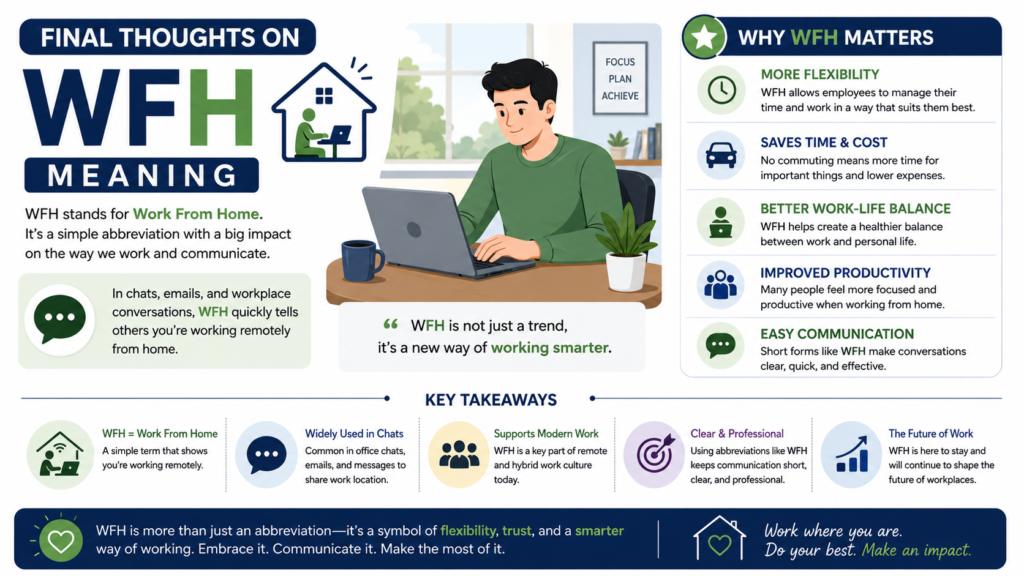
WFH is more than just an abbreviation. It represents a major shift in how people work today. With the rise of remote jobs and digital communication, WFH has become a normal part of everyday language.
As work environments continue to evolve, understanding terms like WFH will help you stay informed and adaptable. full form of wfh.
Conclusion
WFH, which stands for Work From Home, is a widely used term that reflects the growing trend of remote work. It is used in professional settings, job listings, and everyday conversations to describe working outside a traditional office.
While it offers flexibility and convenience, it also comes with its own challenges. By understanding how and when to use WFH, you can communicate more effectively and adapt to modern work environments with confidence.

I am James, a content writer at msseage.com, creating helpful articles about messages, communication, and modern digital trends.