
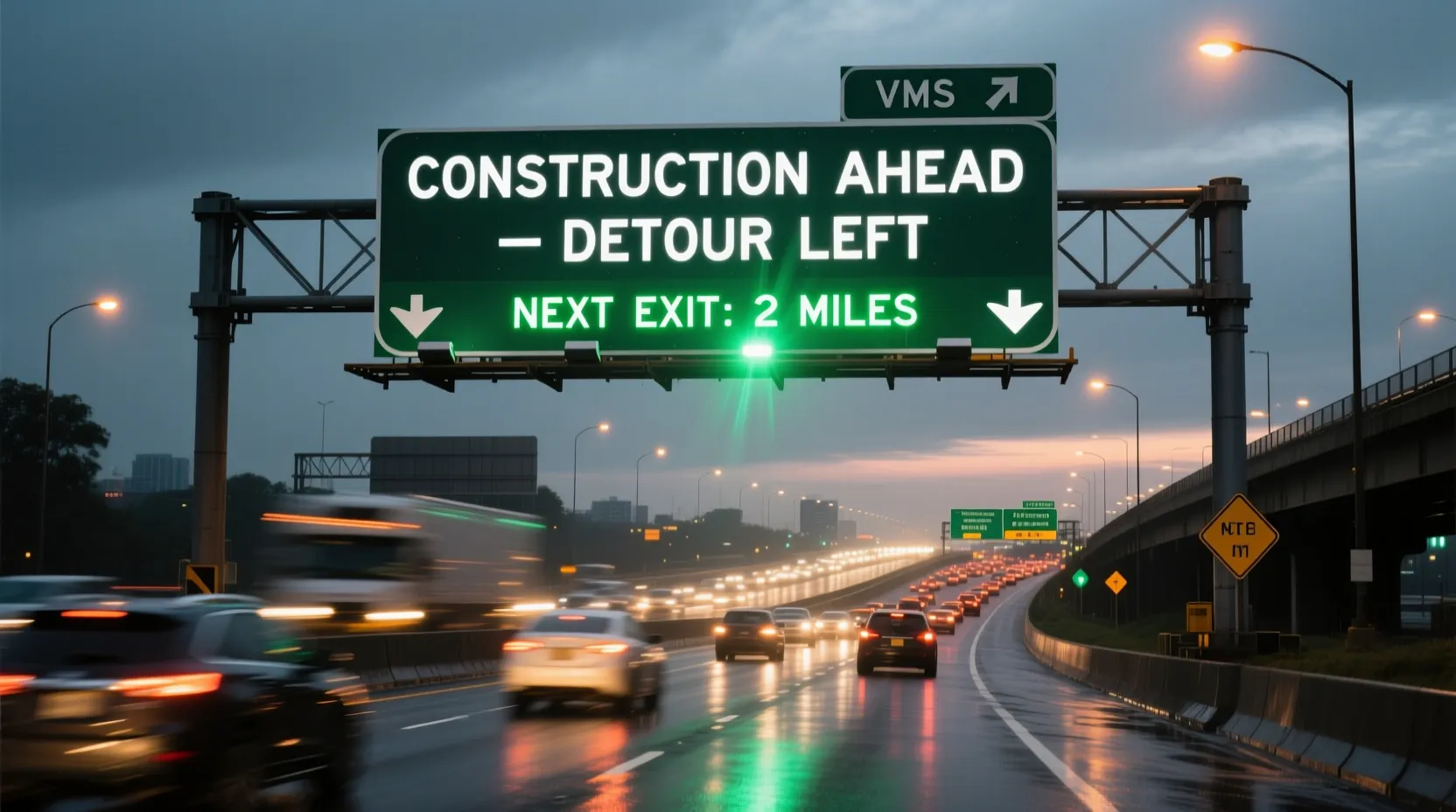
Variable Message Signs, often seen on highways and city roads, are electronic signs that display real-time information to drivers. They provide updates about traffic conditions, accidents, road closures, or important safety messages. Understanding these signs helps drivers make safer decisions and reduces traffic congestion.
This guide explains what variable message signs are, why they are used, common types, and tips for interpreting them correctly on the road.
💬 What Are Variable Message Signs
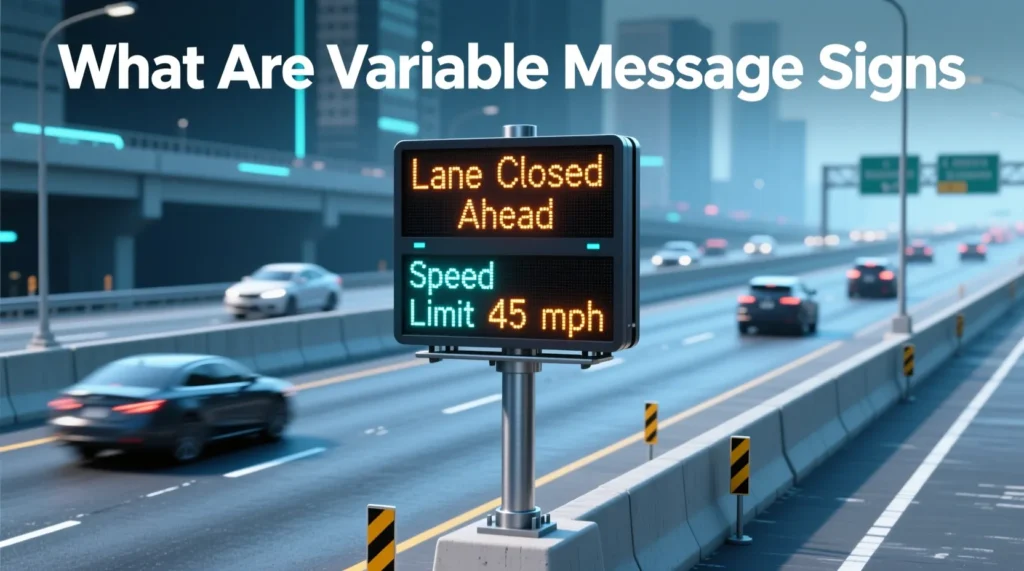
Variable Message Signs (VMS) are electronic road signs that can display changing messages.
They are used to inform drivers of current road and traffic conditions.
VMS can show warnings about accidents, construction zones, or hazardous weather.
They are controlled remotely, often by traffic management centers.
Some signs display speed limits or lane closures dynamically.
Others may provide travel times to destinations or detour routes.
VMS helps improve safety and reduce congestion on busy roads.
Messages are usually short, clear, and highly visible.
These signs can be illuminated at night for continuous visibility.
Drivers are expected to follow the instructions or warnings displayed.
💬 Types Of Variable Message Signs
Full matrix signs display any message using many small lights in a grid.
Arrow boards guide drivers to change lanes or warn of hazards.
Text-only signs display short written instructions like “Accident Ahead.”
Graphic signs use symbols like snowflakes, rain, or roadwork icons.
Combination signs may show text and graphics simultaneously.
Portable VMS can be placed temporarily during construction or events.
Overhead gantry signs are common on highways for lane-specific messages.
Side-mounted VMS are often used in city streets for local traffic info.
Dynamic speed signs show recommended or enforced speed limits.
The choice of sign type depends on the road, traffic, and message requirements.
💬 Purposes Of Variable Message Signs
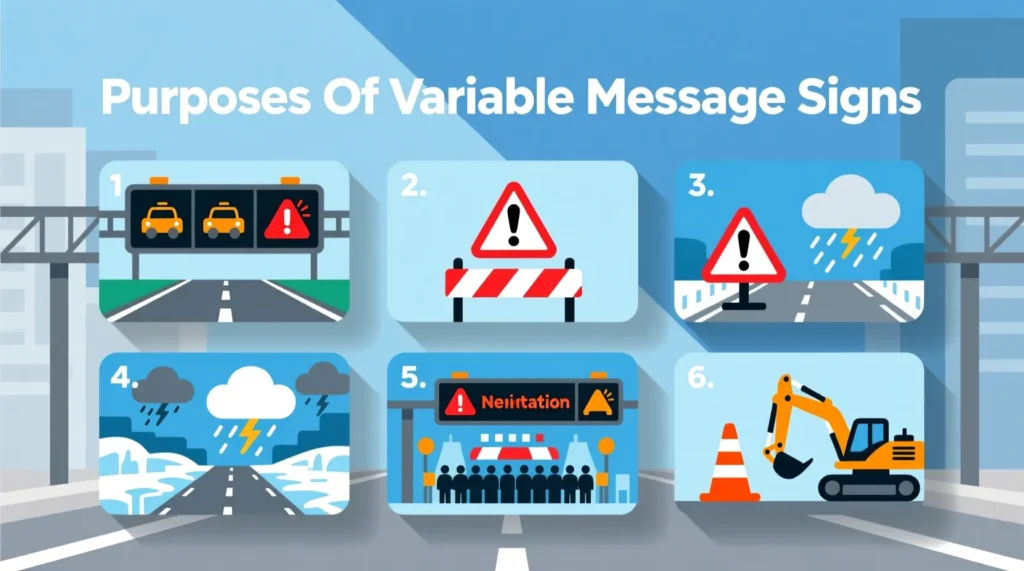
VMS are used to improve road safety for all drivers.
They provide timely information about traffic incidents or hazards.
Help manage congestion by directing traffic efficiently.
Warn drivers about weather conditions, like ice or heavy rain.
Communicate lane closures or road maintenance in advance.
Display emergency alerts, Amber Alerts, or evacuation instructions.
Inform drivers of upcoming tolls or traffic charges.
Encourage smooth driving to reduce sudden braking and accidents.
Guide drivers along detour routes during events or closures.
Enhance overall traffic management by providing real-time updates.
💬 How Drivers Should Interpret VMS
Read messages quickly and carefully while driving.
Adjust speed according to posted warnings or suggested limits.
Follow lane instructions indicated by arrows or symbols.
Pay attention to changing messages; VMS are dynamic.
Do not ignore temporary instructions even if traffic seems clear.
Combine VMS information with other road signs for safe navigation.
Avoid distractions while reading the sign; glance only when safe.
Be prepared for sudden changes in traffic flow.
Expect delays or reroutes and adjust your route if needed.
Trust the information, as it is usually updated by traffic authorities.
💬 Placement And Visibility
VMS are strategically placed to maximize visibility for drivers.
Highways often have overhead gantry signs for each lane.
Urban streets use side-mounted or pole-mounted VMS.
Portable signs are placed in work zones or special events.
Signs are illuminated for visibility during night or poor weather.
Positioning ensures drivers have enough time to react.
VMS are tested for brightness, contrast, and legibility.
Location selection considers traffic speed and density.
Some VMS rotate or change position for optimal viewing angles.
Regular maintenance ensures signs remain functional and readable.
💬 Technology Behind VMS
Most VMS use LED or LCD technology for clear display.
They are connected to traffic management centers via wired or wireless networks.
Software allows for quick updates and real-time message changes.
Some signs are integrated with traffic cameras and sensors.
Data from sensors can trigger automatic messages about congestion or incidents.
Remote control enables authorities to update messages quickly.
Backup power ensures continuous operation during outages.
Some VMS are linked to GPS or vehicle data for precise travel times.
The system logs messages for record-keeping and analysis.
Modern VMS may use solar panels for energy efficiency.
💬 Common Messages Displayed
Accident ahead, expect delays
Roadwork next 2 miles, merge left
Detour ahead, follow signs
Traffic congestion, consider alternate route
Slippery road, reduce speed
Lane closed, use right lane
Emergency alert, stay tuned
Travel time to next city: 25 minutes
Heavy traffic, maintain safe distance
Construction zone, caution drivers
💬 Benefits Of Variable Message Signs
Enhances safety by providing timely alerts to drivers
Reduces traffic congestion through better flow management
Prevents accidents by warning of hazards in advance
Provides clear guidance during emergencies
Supports law enforcement with traffic control measures
Improves communication between traffic authorities and drivers
Allows dynamic response to unexpected road events
Encourages smoother driving behavior and compliance
Saves fuel by reducing stop-and-go traffic
Increases awareness for road conditions in real-time
💬 Limitations And Challenges

Drivers may ignore VMS if overused or unclear
Maintenance and repair costs can be high
Power outages can temporarily disable the signs
Messages may be misinterpreted if too long or complex
Limited space for detailed instructions
Installation requires careful planning and traffic study
Environmental factors like glare or fog can reduce visibility
Not all drivers pay attention to every message
Incorrect messages due to system errors may confuse drivers
Coordination with other traffic management tools is necessary
💭 FAQs About Variable Message Signs
What is a variable message sign
It is an electronic road sign that can change its display to show real-time traffic or safety information.
Are variable message signs only for highways
No, they are used in cities, construction zones, and special events too.
How do variable message signs work
They are controlled remotely by traffic authorities and display messages based on real-time data or pre-programmed alerts.
Can drivers ignore variable message signs
No, ignoring them can be dangerous and may violate traffic laws.
Do variable message signs improve traffic safety
Yes, they help inform drivers, reduce accidents, and manage traffic flow efficiently.
✅ Conclusion
Variable message signs are an essential tool for modern traffic management. They keep drivers informed, help prevent accidents, and manage congestion on both highways and city streets.
By understanding their messages, following instructions, and staying alert, drivers can navigate safely and efficiently. Proper use of VMS benefits everyone on the road, making driving smarter and safer.

My name is Emma, a writer at msseage.com, sharing clear and helpful content about messages and digital communication.