
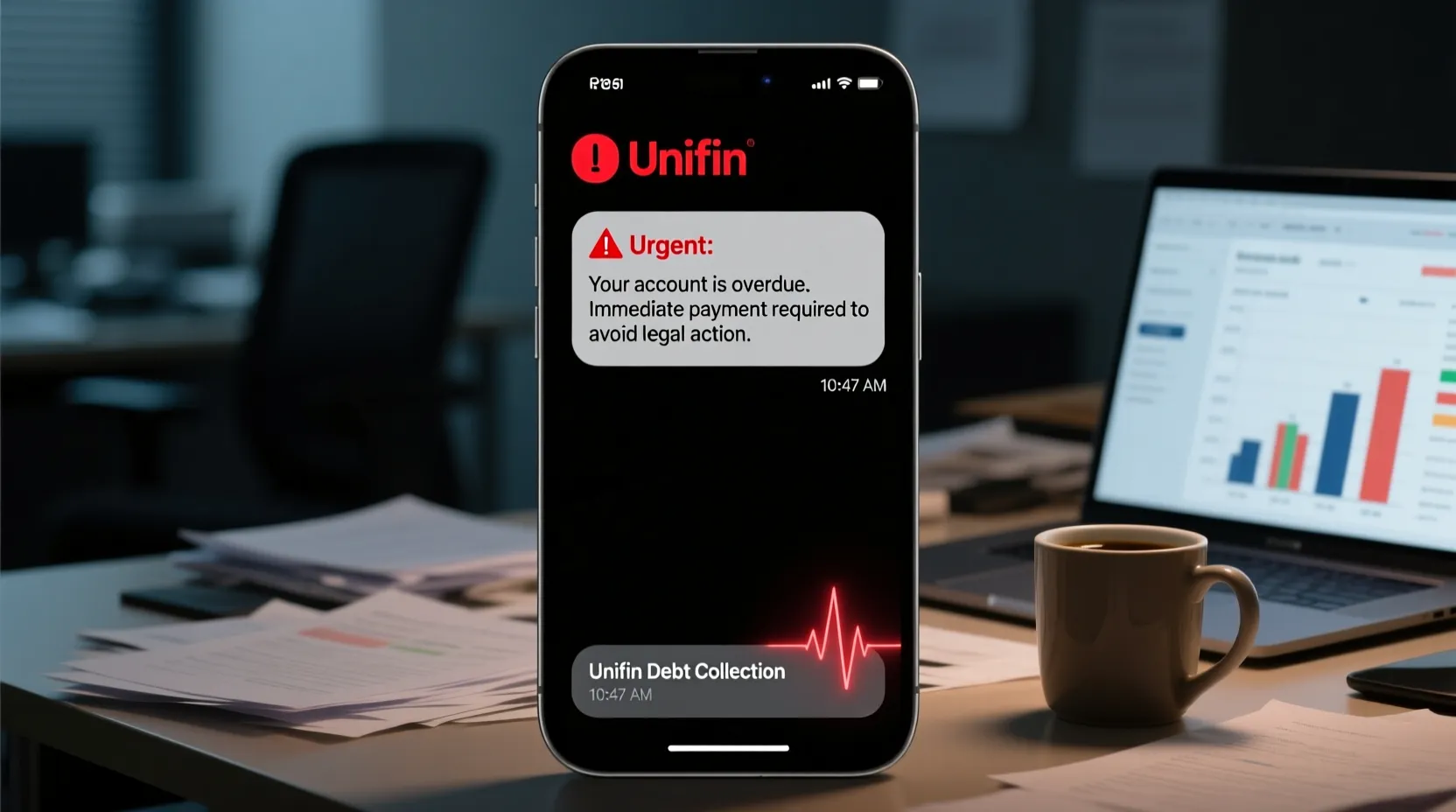
Getting a Unifin debt collector text message can make your heart drop. One moment your phone is quiet, and the next you see a message about a debt, payment, or account you may not even recognize. It is normal to feel worried, confused, or even scared.
This guide will help you understand who Unifin is, what a Unifin debt collector text message usually means, and simple, calm steps you can take before you reply, pay, or ignore anything.
💬 What Is A Unifin Debt Collector Text Message
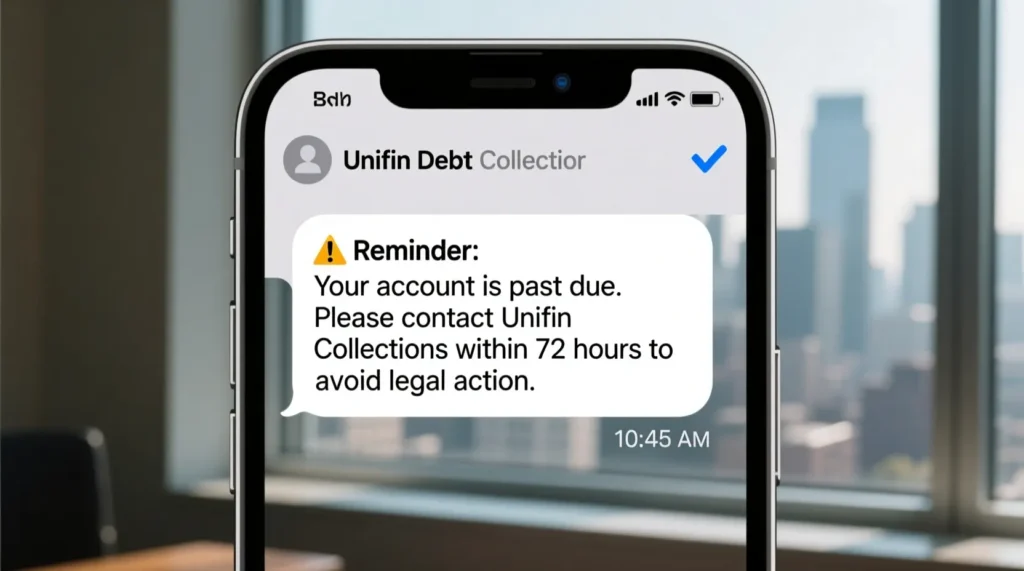
A Unifin debt collector text message is a message you receive from a company that says they are Unifin or collecting for Unifin.
It usually mentions a past-due balance, account, or collection file.
The message may ask you to call a number or visit a link.
It might include a reference number or partial account number.
Sometimes it says this is an attempt to collect a debt.
You may see words like settlement, payment option, or discount offer.
The goal is to get you to respond or make a payment.
But not every message is clear, and some may be scams.
That is why you should not rush.
First, understand what you are looking at.
💬 Stay Calm Before You Respond
A Unifin debt collector text message can bring panic.
You might fear legal trouble, calls at work, or harm to your credit.
But reacting in fear can lead to quick, unsafe decisions.
Do not send money or personal details right away.
Do not click links if you are unsure who is really texting.
Take a breath and treat the message like a claim, not a final truth.
You have a right to ask questions and request proof.
Debt collection is a process, not a single text.
You are allowed to pause and review your options.
Calm, slow steps protect you more than instant replies.
💬 Check If The Unifin Text Looks Legitimate
Not every Unifin debt collector text message is real.
Scammers sometimes pretend to be real collection companies.
Look at the number or short code the text came from.
Check if the message includes your full name or only “Dear Customer”.
Watch for spelling mistakes, strange grammar, or strong threats.
Be careful with links that look odd or shortened.
Real collectors usually provide a phone number and company name.
Do not confirm personal data by text, like full SSN or full bank details.
If something feels off, trust that feeling and slow down.
You can always contact Unifin using a verified phone number instead.
💬 Compare The Message With Your Past Debts
Think about your real history with debts.
Did you have a credit card, medical bill, loan, or account that went unpaid?
Have you received letters or calls before about this same debt?
Check any old mail or emails for the name Unifin or the original creditor.
Look at the amount mentioned in the Unifin debt collector text message.
Does it seem close to what you remember, or completely random?
If you keep records, compare dates and balances.
If nothing matches at all, the debt may be wrong, outdated, or not yours.
You do not have to accept every claim as valid.
Your memory and documents are important tools here.
💬 Contact Unifin Using A Trusted Source
Do not rely only on the number or link inside the text.
Instead, search for Unifin’s official contact information yourself.
Use a trusted website or your own records if you have them.
Call the main number or visit the official site, not just the link in the text.
Ask if they sent you a Unifin debt collector text message recently.
Give them only the basic reference number from the text, if any.
Ask them to confirm the original creditor and amount.
If they deny sending the text, it might be a scam.
If they confirm, you can continue the conversation safely.
Always move the talk to a verified contact channel.
💬 Ask For Written Validation Of The Debt
You have the right to understand a debt in writing.
Tell the agent you want a written notice or validation letter.
This should list the original creditor, amount, and other key details.
Ask them how they got your number and why they believe you owe this.
You can request them to send information by mail or secure email if available.
Keep copies of everything you receive.
Do not rush into payment before you see proof.
If they refuse to send written info, that is a red flag.
Real collectors expect questions and requests like this.
You are not being rude; you are being careful.
💬 Do Not Share Sensitive Information By Text
A Unifin debt collector text message may ask you to reply.
Do not send full Social Security numbers, full card numbers, or bank details in text.
Text messages are not a secure place for that kind of data.
If you need to make arrangements, use a verified phone call or secure portal.
Even then, ask about safer ways to pay, like official websites.
Never share one-time codes sent by your bank with anyone.
Scammers use fake collection messages to steal data.
Legit companies will not demand sensitive info by plain text.
Keep replies short and cautious if you respond at all.
You can always say you prefer to talk by phone after verifying the number.
💬 Explore Payment Or Dispute Options Calmly
If the debt is real and belongs to you, you still have options.
Ask about payment plans if you cannot pay in full.
You can ask if they offer settlements or reduced payoffs.
Get any agreement in writing before you pay.
Make sure the letter clearly states what happens after payment.
If you believe the debt is wrong, say that you dispute it.
Clearly state that you want them to review and correct any errors.
Keep records of every call date, time, and what was said.
Do not let a single Unifin debt collector text message push you into panic.
You can create a plan that fits your situation.
💬 Protect Yourself From Harassment Or Threats

Debt collection should follow rules and basic respect.
If texts become constant, rude, or threatening, that is a warning sign.
You do not have to accept insults, lies, or extreme pressure.
You can ask them to limit contact methods if allowed in your area.
Save copies of abusive messages or voicemails.
These can help if you ever need to report misconduct.
If they threaten things that sound unrealistic or extreme, be careful.
Scammers often use fear to force quick payments.
Real collectors may be firm, but they should still follow the law.
You deserve to be treated with basic dignity, even if you owe money.
💭 FAQs About Unifin Debt Collector Text Message
Is a Unifin debt collector text message always real
Not always. Some messages may be scams pretending to be Unifin. Always verify using a trusted phone number or website.
What should I do first when I get this text
Stay calm, do not click links, and check your real debt history. Then contact Unifin through verified contact info.
Can I ask for proof of the debt
Yes. You can request written details like the original creditor, amount, and dates before making any payment.
Should I pay through a link in the text
Only after you fully verify it is real and you are on a secure, official site. When in doubt, use a phone call and official site.
What if the debt is not mine
Tell them you dispute the debt and ask them to review. Provide basic info, but stay cautious and ask for written proof.
✅ Conclusion
A Unifin debt collector text message can feel heavy, but it does not mean you must act in fear. You have time and rights. By staying calm, verifying the sender, checking your real debt history, and asking for written proof, you protect yourself from mistakes and scams.
If the debt is real, you can still explore payment plans, settlements, or disputes in a way that fits your life. If it is not, your careful steps will help you push back. A single text does not decide your future. Your decisions, taken slowly and wisely, do.

I am James, a content writer at msseage.com, creating helpful articles about messages, communication, and modern digital trends.