
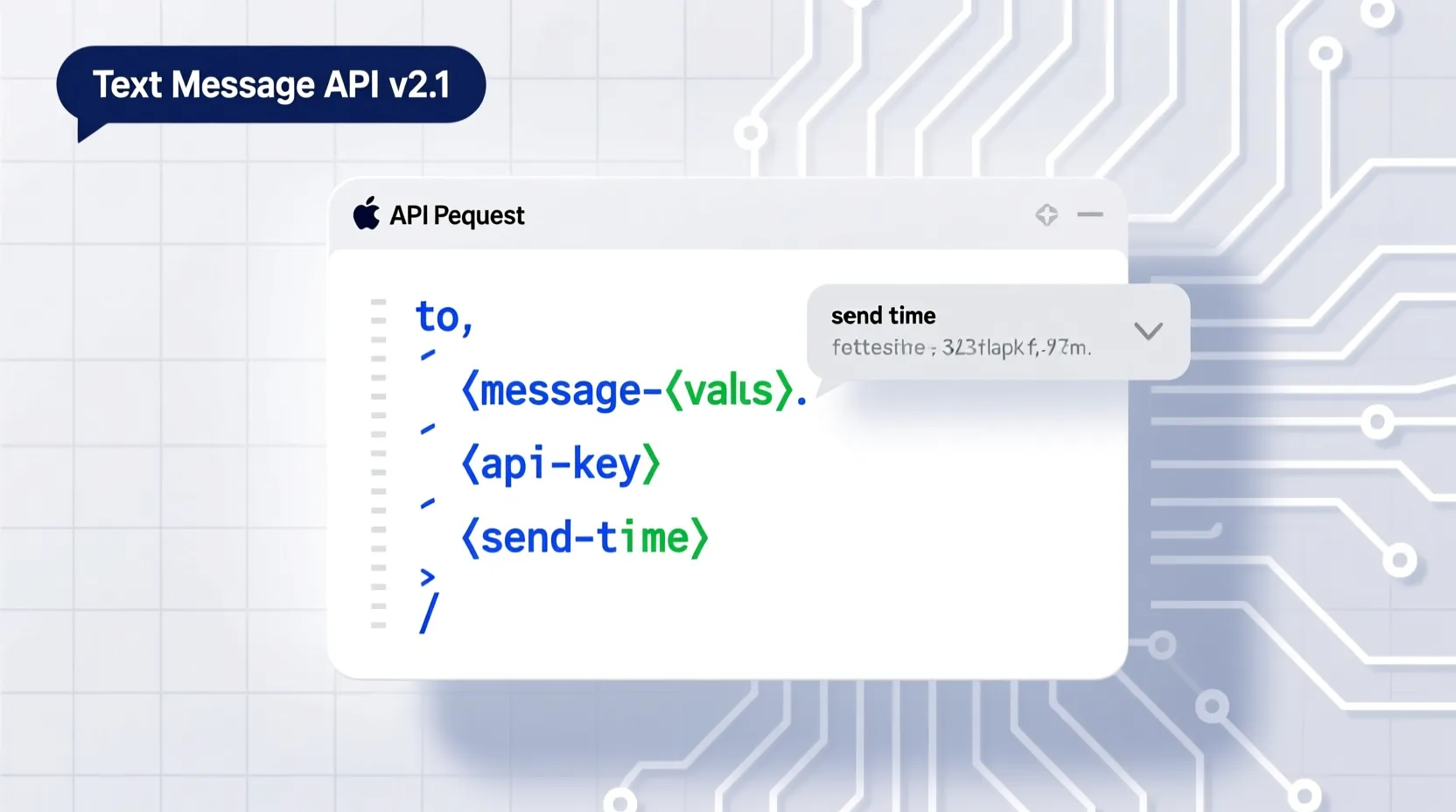
A text message API lets apps and websites send and receive SMS messages automatically. If you’ve ever received a verification code, alerts, or promotions from an app, it likely came through a text message API.
This guide explains what a text message API is, how it works, common use cases, and tips for using it safely and efficiently.
💬 What Is A Text Message API
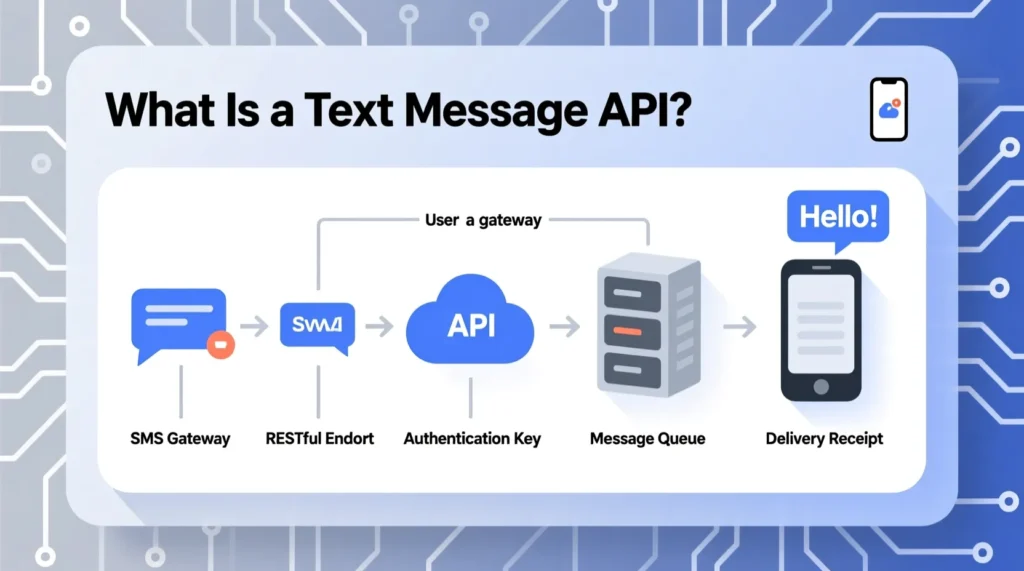
A text message API is a programming interface for sending and receiving SMS.
It connects your software to mobile networks without a phone.
Developers use it to automate messages to users or customers.
APIs provide a structured way to request sending a message.
They often return status info like delivered, failed, or queued.
APIs can include templates, sender IDs, or scheduling options.
Some support multimedia messages like images or videos.
You do not need to handle each phone number manually.
APIs are scalable for businesses of any size.
They are widely used for communication in apps and services.
💬 How Text Message API Works
You send a request from your app or software to the API.
The API communicates with SMS gateways or mobile carriers.
It delivers the message to the recipient’s phone number.
You can request delivery reports to track success or failure.
APIs may require authentication, like keys or tokens.
Parameters include phone number, message content, sender ID, and time.
Some APIs allow bulk messaging to multiple numbers at once.
They often support scheduling for future delivery.
Developers handle API requests with standard code libraries.
The API removes the need for manual texting and phone hardware.
💬 Common Uses Of Text Message APIs
Verification codes for login or account creation.
Alerts for banking, appointments, or deliveries.
Promotional messages or marketing campaigns.
Two-way messaging for surveys or customer feedback.
Reminders for events, subscriptions, or services.
Emergency notifications for organizations or institutions.
Customer support notifications or updates.
Internal business alerts for staff or teams.
Transactional updates for orders or payments.
Automated chatbots or interactive services via SMS.
💬 Popular Text Message API Providers
Twilio – widely used, easy integration, supports global SMS.
Plivo – scalable solution with voice and messaging APIs.
Nexmo (Vonage) – strong international coverage and tracking.
ClickSend – multi-channel messaging including SMS.
Sinch – reliable SMS delivery and analytics.
Telesign – focuses on security and verification APIs.
MessageBird – global reach with advanced features.
AWS SNS – integrates messaging into Amazon Web Services apps.
Infobip – enterprise-level messaging solutions.
Bandwidth – developer-friendly and cost-effective SMS API.
💬 Advantages Of Using A Text Message API
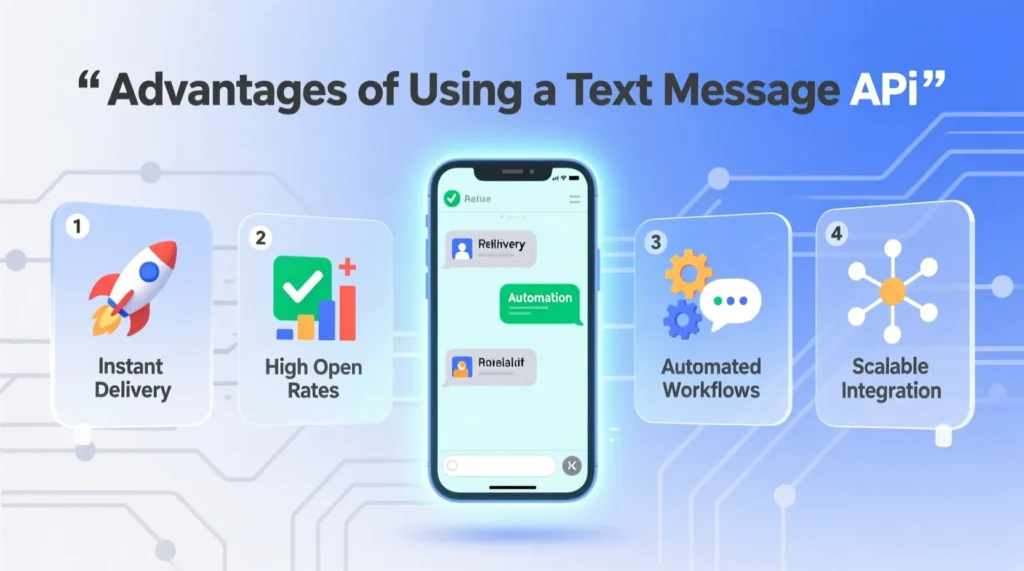
Automates repetitive messaging tasks.
Scales easily for small businesses to large enterprises.
Provides delivery tracking and analytics.
Supports bulk messaging to thousands of users.
Allows scheduling and templating for consistency.
Reduces errors from manual texting.
Integrates with web apps, mobile apps, or CRM systems.
Enhances customer engagement and retention.
Supports secure, authenticated messaging.
Enables interactive or two-way communication efficiently.
💬 Security Considerations
Use secure authentication methods like API keys or tokens.
Never hardcode sensitive credentials in public code.
Encrypt messages if sending sensitive info.
Follow privacy laws like TCPA, GDPR, or local SMS regulations.
Monitor API logs for unusual activity or errors.
Rate-limit messages to prevent abuse.
Verify recipient consent for marketing or alerts.
Use official provider SDKs for safe integration.
Regularly rotate keys and credentials.
Maintain documentation for compliance and audits.
💬 Best Practices For Developers
Test APIs in a sandbox environment first.
Use templates to keep messages consistent.
Validate phone numbers before sending messages.
Handle delivery reports and errors properly.
Avoid spamming users; respect opt-out requests.
Monitor usage to control costs and performance.
Use bulk messaging wisely with throttling.
Document your API integration clearly.
Keep code clean, modular, and maintainable.
Regularly update your API libraries for security fixes.
💬 Cost And Pricing Considerations
SMS API pricing varies by provider and region.
Charges are often per message sent, sometimes per character.
International messages can cost more than domestic.
Some providers charge for inbound messages.
Additional fees may include premium sender IDs or templates.
Volume discounts may apply for large campaigns.
Monitoring costs helps avoid unexpected bills.
Some providers offer pay-as-you-go, others monthly plans.
Always check provider pricing for your country.
Budgeting ahead ensures smooth messaging operations.
💬 Integration With Other Systems

Text message APIs can integrate with CRMs, e-commerce platforms, and apps.
They can trigger messages from database events or user actions.
Integration enables automated workflows like order confirmations.
Developers can combine SMS with email, push notifications, or voice calls.
APIs often support webhooks for real-time notifications.
Logs and analytics can feed into reporting dashboards.
Integration reduces manual intervention and errors.
It helps unify communication channels in one system.
APIs can connect with marketing automation tools.
Proper integration ensures consistent user experience.
💭 FAQs About Text Message API
What is a text message API
It is a programming interface that lets apps send and receive SMS automatically.
Why use a text message API
To automate messages, track delivery, and scale communication with users.
Can I send international messages with an API
Yes, many providers like Twilio, Plivo, and Nexmo support global SMS.
Is using a text message API secure
Yes, if you use authentication, encryption, and follow privacy laws.
Do I need programming skills to use an API
Yes, basic programming knowledge helps integrate and manage the API effectively.
✅ Conclusion
A text message API is a powerful tool for automating SMS communication, improving customer engagement, and scaling messaging operations.
By choosing a trusted provider, following security best practices, and integrating carefully, businesses and developers can deliver timely, reliable messages to users worldwide.
Whether for verification codes, alerts, or marketing campaigns, a text message API simplifies communication while keeping it efficient and secure.

Emily is a professional content writer at msseage.com, specializing in messaging guides, tech tips, and user-friendly digital communication content